Urinary Wet Food for Cats Pork

A wet food specifically formulated for cats with urinary tract disorders

Low in minerals Rich in water and courgette Moderate calorie content 100% animal proteins Available at +300 veterinarians
🚚 Livraison estimée sous 3 à 7 jours

🔐 Secure payment

😻 Purring customer care

A wet food for adult cats with a history of urinary problems, developed by our vet and specialist in clinical nutrition, Dr. Géraldine Blanchard.

Ziggy VET Urology wet food has been specifically developed to support the urinary function of cats with urinary problems (idiopathic cystitis, reduction of struvite stone formation, and calcium oxalate stones).

Tasty and indulgent, Ziggy VET wet food for cats with urinary problems is packed with high-quality proteins, highly digestible, and designed to support your feline friend’s health—keeping him happy and purring with delight!

A wet food formulated to support urinary function in case of urinary tract disorders (idiopathic cystitis, reduction of struvite and calcium oxalate crystal formation) :

• Limited and balanced mineral content
• 100% high-quality animal proteins
• Rich in courgette and water

Urinary Wet Food for Cats Pork

Livraison estimée sous 3 à 7 jours

🔐 Secure payment

😻 Purring customer care

A wet food for adult cats with a history of urinary problems, developed by our vet and specialist in clinical nutrition, Dr. Géraldine Blanchard.

Ziggy VET Urology wet food has been specifically developed to support the urinary function of cats with urinary problems (idiopathic cystitis, reduction of struvite stone formation, and calcium oxalate stones).

Tasty and indulgent, Ziggy VET wet food for cats with urinary problems is packed with high-quality proteins, highly digestible, and designed to support your feline friend’s health—keeping him happy and purring with delight!

  • Pork 53.9% (Heart, Lobe)
  • Water
  • Chicken 14.5% (Heart, Liver)
  • Dehydrated zucchini 2.5% (equivalent to 24% fresh zucchini)
  • Minerals
  • Rapeseed oil*
  • Fish oil
  • Calcium carbonate
  • Thyme

*Sources of essential fatty acids

% As Fed (Raw Matter):

(if you want to compare with dry food/kibble, look at the % on dry matter just below)

  • Crude Protein: 12%
  • Crude Fat: 6%
  • Crude Ash (minerals): 1.3%
  • Crude Fibre: 0.79%
  • NFE (Carbohydrates): 0.91%
  • Moisture: 79%

  • Calcium: 0.17%
  • Phosphorus: 0.15%
  • Ca/P Ratio: 1.1
  • Potassium: 0.39%
  • Sodium: 0.20%
  • Chloride: 0.33%
  • Magnesium: 0.03%
  • Hydroxyproline: <0.2%

Fatty Acids:

  • Omega-6: 0.9%of which linoleic acid: 7.9 g/Mcal MEarachidonic acid: 1 g/Mcal ME
  • Omega-3: 0.21%of which alpha-linolenic acid: 1.4 g/Mcal MEEPA + DHA: 0.05%
  • Omega-6/Omega-3 Ratio: 4

Protein-to-Calorie Ratio: 118 g/Mcal ME (= Crude Protein/Metabolisable Energy * 1000)

Protein-to-Phosphorus Ratio: 80

Metabolisable Energy: 102 kcal ME/100g

% On Dry Matter Basis:

  • Protein: 57.1%
  • Fat: 28.6%
  • Crude Ash (minerals): 6.2%
  • Fibre: 3.8%
  • NFE (Carbohydrates): 4.3%

Complete dietetic feed for cats with urinary disorders

Essentials to balance the cat's diet and prevent any deficiency:

  • Iodine (3b203): 0.51 mg
  • Manganese (3b503): 3 mg
  • Selenium (E8 & 3b811): 19 µg
  • Zinc (3b607 & 3b605): 38 mg
  • Vitamin D3 (3a671): 194 IU
  • Vitamin E (3a700): 466 mg
  • Vitamin B1 (3a821): 65 mg
  • Vitamin B2: 47 mg
  • Vitamin B3 (3a315): 466 mg
  • Pantothenic Acid (3a841): 86 mg
  • Vitamin B6 (3a831): 37 mg
  • Biotin (3a880): 116 µg
  • Folic Acid (3a316): 11 mg
  • Vitamin B12: 279 µg
  • Choline (3a890): 58 mg
  • Taurine (3a370): 660 mg

Technological Additives: Carrageenan, Xanthan gum, Guar gum

The ingredients of our wet food for adult cats with urinary tract disorders with Pork

• Pork 53.9% (Heart, Lobe)
• Water
• Chicken 14.5% (Heart, Liver)
• Dehydrated Courgettes 2.5% (equivalent to 24% fresh courgettes)
• Minerals
• Rapeseed Oil*
• Fish Oil*
• Calcium Carbonate
• Thyme

*Source of essential fatty acids

Complete dietetic food for cats with urinary tract disorders
Pâtée pour chat adulte souffrant de troubles urinaires de la marque Ziggy pour chat

Because their miaows say it all

our wet food for Cats with urinary problems unique

Ziggy - Restricted and balanced mineral levels
Restricted and balanced mineral levels

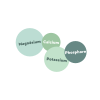
0.17% calcium, 0.16% phosphorus, 0.03% magnesium, with enough potassium and no excess sodium to help reduce crystal substrate saturation in your cat's urine and promote the well-being of their urinary functions.

Ziggy - Premium proteins
Premium proteins

Like all our wet food, our recipe principally contains muscle (hearts) and premium organ meats (liver, lung lobes), which have very high nutritional values. This is reflected in the amino acid profile and the very low collagen content (less than 0.2% per 100g, i.e. less than 1.7% hydroxyproline/protein). This is exceptionally low for a food that's 100% of the protein is animal-based.

Ziggy - Rich in courgette and water
Rich in courgette and water

Water to increase urine volume and courgette to reduce urinary calcium oxalate saturation. Our Ziggy Vet Urology wet food contains 2.5% dehydrated courgette, the equivalent of 24% fresh courgette, with proven effects.

A perfectly balanced wet food

Ziggy Vet Urology wet food has a balanced calorie content, to avoid overconsumption and satisfy even the most gluttonous or overweight cats.

Remember to split your cat's daily portion into at least 4 meals. This is normally easily achievable, irrespective of the habits and schedules of the humans in the house. One meal in the morning when you get up, another before leaving the house, at midday or when you get home (at whatever time) and one later in the evening.

Like in all Ziggy wet foods, there's no added flavoring. No need, the natural ingredients make Ziggy Vet Urology wet food appetizing and tasty.

A wet food that takes care of your cat suffering from urinary problems, while keeping him purring with delight.

our Veterinary Nutritionist

Wet food low in minerals, with exceptional quality proteins in moderate quantities, rich in courgette and water is by far the most suitable diet for cats suffering from urinary problems. Just like Ziggy VET.

Discover the different types of urinary problems, their symptoms, and how to prevent them with our Veterinary specialist Dr. Géraldine Blanchard, feline nutrition expert with over 25 years of experience:

By definition, it’s a condition of unknown origin but it often develops during periods of major stress.

The best course of action is to identify and remove the source of stress and minimise any additional stress. In parallel, provide a wet food diet that provides for all your cat’s essential nutritional needs. Divide their daily portion into 4 meals served throughout the day, and maintain good general hygiene (access to the outdoors, one litter box per cat, maintained daily and placed in a quiet location, fresh water easily available at all times...)

Struvite stones (also called magnesium ammonium phosphate or MAP) occur in cases of urinary saturation and alkalisation (alkaline urine), or in cases of urinary infection with urease-positive bacteria. Bacteria produce urease that alkalises urine and increases the proportion of ammonia. The increase in ammonia, coupled with higher urinary pH, results in the formation of small crystals that can then develop into stones.
The crystals can irritate the bladder and result in cystitis (bladder inflammation) or even cause blood in the urine, making urination painful. The stones can also get stuck in the urinary tract. If a cat cannot urinate, treat it as an emergency.

Risk of urinary infection is higher in cases of diabetes, kidney failure, compromised immunity...

It’s important to look out for diseases that increase these risks and treat them quickly. If an infection develops, treat it with the appropriate antibiotics until any stones and crystals disappear.

Concerning diet, the aim is to reduce urinary saturation through a diet of wet food low in minerals (or crude ash or inorganic matter), that provides minimal requirements of calcium, phosphorus, magnesium... and assures all of a cat’s other nutritional needs.

It is also advisable to divide food intake into at least 4 meals and provide each fresh and within easy access at all times.

Calcium oxalate stones form in cases of urinary saturation with calcium and oxalic acid and prolonged urine acidification (acidic urine). Often already formed in the kidneys, they end up in the bladder. Like struvite stones, they can also form in cases of urinary infection with urease-positive bacteria responsible for alkalisation and increased proportion of ammonia in the urine. The increase in ammonia, coupled with higher urinary pH, results in the formation of small crystals that can then develop into stones.

The crystals can irritate the bladder and result in cystitis (bladder inflammation) or even cause blood in the urine, making urination painful. The stones can also get stuck in the urinary tract. If a cat cannot urinate, treat it as an emergency.

The risk of urinary infection is increased in cases of diabetes, kidney failure, compromised immunity...

It’s important to look out for diseases that increase these risks and treat them quickly. If an infection develops, treat it with the appropriate antibiotics until any stones and crystals disappear.

Concerning diet, the aim is to reduce urinary saturation through a diet of wet food low in minerals (or crude ash or inorganic matter), that provides minimal requirements of calcium, phosphorus, magnesium... and assures all of a cat’s other nutritional needs.

It is also advisable to divide food intake into at least 4 meals and provide each fresh and within easy access at all times.

Cats suffering from urinary problems meow before or during urination, show difficulty urinating, or in more severe cases, can’t urinate at all. Blood may also be present in their urine. External, behavioral signs are also possible such as uncleanliness.

Some affected cats urinate in places other than their litter box.

Associating their pain with their toileting, they prefer to relieve themselves elsewhere.

Although the symptoms are identical, it is nevertheless essential to determine the origin of urinary problems, which can be due to cystitis (idiopathic or not) or the presence of urinary stones. Diagnosing urinary stones is especially necessary to ensure proper treatment!

Cystitis can be due to congenital malformation, tumour, presence of urinary stones, or urinary tract infection. When idiopathic, stress is, in most cases, identified as the cause.

As for struvite and calcium oxalate stones, several risk factors exist:

- Water-deficient diet

- Inappropriate diet

- Non-divided meals

- Cat's sex and breed

- An underlying condition

Find more information about the different causes of urinary problems in our dedicated article!

Cystitis and urinary stones are both urinary problems that require medical care and a special diet. Adapted nutrition, specifically formulated for cats suffering from urinary problems, is essential for a cat suffering from either of these conditions.

Whatever the origin of your cat's urinary problem, its food will be key. It must be:

- Rich in water to ensure urinary volume

- Rich in courgettes to reduce urinary saturation

- Low in minerals (calcium, phosphorus, magnesium) to decrease saturation in crystal substrates

- Perfectly balanced to provide all essential nutrients for good cat health

- Limited in calorie content to fight overconsumption and feed your cat without starving him (even overweight cats).

Discover more about the different causes of urinary problems in our dedicated article!

from our Experts!

Feline idiopathic cystitis and urinary calculi: what causes them and how can they be prevented?

Cats are particularly sensitive animals, frequently prone to urinary problems such as cystitis and urinary calculi, also known as urolithiasis. These conditions affecting the urinary tract are particularly painful, require medical treatment, changes to the cat's environment and a specialised diet. We've written an article dedicated to these disorders full of tips on how to take care of your furry friend and what you can do to prevent relapses.

by over 200 vets

"We finally have a reliable, premium range to offer our customers, and the nutritional effects on their pets are impressive"

Dr Aurélie Zyngfogel, vet
Over 10 years in practice

Indications

1

SPECIFIC NUTRITIONAL GOAL

To reduce the formation of struvite and calcium oxalate urinary stones.

2

INFORMATIONS

A 'dietary' food should only be given after consultation with your vet. We also advise you to consult your vet every 6 months to monitor your cat's health. If your cat's health deteriorates in any way, seek advice from your vet as soon as possible.

It's also important that your cat has easy access to fresh water throughout the day.

3

BE AWARE OF

This food is intended for therapeutic purposes and should be recommended by your vet depending on your pet's health.

Not suitable for pregnant or nursing cats or kittens.

Ziggy VET

Each Ziggy VET recipe is the product of Dr Vet Géraldine Blanchard’s nutritional and scientific expertise and several years of research and development with the team at our partner factory La Normandise.

The Ziggy VET range demonstrates our commitment to placing cutting edge nutritional science and our know-how at the centre of your cat’s health.

- Marie & Alyosha, Ziggy Founders
sur la pâtée urologie

Besoin d'aide ?

L'équipe Ziggy est à votre écoute du Lundi au Vendredi de 9h à 18h.

Nos Cat Moms vous répondent en moins de 2h !
For a cat suffering from urinary disorders, an exclusively wet diet is essential to promote hydration and dilute the urine. Ziggy Urology wet food, formulated by Dr Géraldine Blanchard, provides high-quality proteins while taking care of the urinary tract.

A cat with a weak bladder due to cystitis, crystals or any other urinary problem needs to be kept well hydrated through his food to protect his urinary tract.

The best advice we can give you is to switch your cat to an exclusively wet food diet. 😺

Our Urology wet food for cats has been formulated by veterinary Dr Géraldine Blanchard, an expert in feline nutrition. Like all Ziggy recipes, our wet food for cats suffering from urinary problems contains exceptionally digestible premium proteins. This tasty wet food lets you care for your cat while keeping him purring with delight!

With wet food, urine will be less concentrated and more diluted, helping to reduce the risk of urinary problems.

Dry food, on the other hand, won't provide the hydration your cat needs.

Ziggy refuses the standard ingredients of industrial pet food (carcasses, MRM, meat meals, starch, nitrites) and sources its meats exclusively in France. Norman pork, a lean and protein-rich meat, is particularly suited to sterilised and sedentary adult cats.

Our recipes follow very strict specifications. We have banned most of the ingredients used by the pet food industry: carcass scraps, MSM (mechanically separated meat), meat meal, starch, nitrites, flavourings, etc.

In addition to the few raw materials we allow, we are determined to source our meat in France, and refuse to use meat products from the other side of the world (like lamb, for example, which comes mainly from New Zealand). Pork has the advantage of being a lean, ‘white’ meat that is low in calories and available in sufficient quantities in France, where it’s widely consumed. What's more, the region in which our plant is located (in Normandy) is a pork and beef farming area. Pork is a meat that is particularly well suited to adult, neutered and sedentary cats, as it is low in calories and rich in quality proteins.

Ziggy products are stored in a cool and dry place. Once opened, wet food keeps for 48h in the refrigerator and kibble for 6 to 8 weeks in their resealed bag.

Ziggy cat food should be kept in a cool, dry place, away from heat and light. Your furry friend will have no problem eating it up to the used-by date you’ll find on the product’s packaging.

Once opened, a wet food tray can be kept in the fridge for 48 hours (preferably in a closed container). Dry food should be kept closed in a cool, dry place once opened. Ideally, dry food should be eaten within 6 to 8 weeks.

For more details on storing Ziggy products, please refer to our article.

Variations in texture or colour between two batches are normal: they reflect the use of fresh raw materials and the absence of nitrites. Each batch is marketed after quality control and validation of nutritional analyses.

As we only work with fresh raw materials from our partner breeders, the texture and/or color of our wet food can vary slightly from one production batch to the next.

This is perfectly natural and can vary according to the season or meat supplies.

Each batch of wet food goes through rigorous quality control and nutritional analysis to ensure it lives up to the standards we set ourselves. However, slight variations in taste or texture may still occur.

The more natural the product, the more it’s subject to these sorts of variations. We could control this by adding nitrite, but we don’t. We would rather embrace these natural characteristics and guarantee your cat a healthy diet.

Ziggy wet foods are formulated by Dr Veterinarian Géraldine Blanchard, specialist in feline nutrition. Free from starch and sugar, a predominantly wet diet (75% minimum) reduces the risks of overweight, diabetes and urinary disorders, while promoting the cat's natural hydration.

Our recipes have been formulated by Dr Géraldine Blanchard, a veterinary specialized in feline nutrition. Our high-quality wet food is formulated around the most advanced knowledge in feline nutrition.

- Wet food has fewer calories than dry food! Cats fed mainly or entirely on wet food are less likely to become overweight or obese.

- When wet food accounts for at least 75% of the diet of a neutered, sedentary cat, it reduces their risk of diabetes. What’s more, all our wet food is starch-free (a major source of carbohydrates) and sugar-free!

- Thanks to wet food, cats get more water than if they ate dry food and drank on the side. This helps them produce more urine, reducing their risk of developing urinary problems.

- At Ziggy, we're no minimalists: essential nutrients are provided in generous quantities. The first visible proof of this being a magnificent coat.

- Finally, by choosing quality wet food, you're investing in your cat's health and saving on vet bills.

The transition to Ziggy food is done gradually: increase the kibble by 10% per day over 10 days, then introduce wet food starting from half a teaspoon, mixing it with a fork into the previous wet food.

Cats like to cling to their habits; they don't always like change! For a successful dietary transition, both in terms of digestion and behavior, we recommend incorporating Ziggy's wet food gradually into their diet. If you need personalized nutritional support, you can download our E-book on how to manage a gentle dietary transition.

Here's what we recommend for a successful dry food transition:

Mix a little Ziggy into their usual dry food and serve as normal.

- Day 1: 10% ZIGGY - 90% Usual dry food

- Day 2: 20% ZIGGY - 80% Usual dry food

- Day 3: 30% ZIGGY - 70% Usual dry food& so on!

Once you've reached 100% ZIGGY dry food, wait a few days before starting the wet food transition!

Here's our suggestion for the wet food transition:

- Day 1: Half a teaspoon of ZIGGY's mixed with their usual wet food.

It's really important to mix both thoroughly with a fork to achieve a homogeneous consistency.

- Day 2: One teaspoon of ZIGGY's mixed with their usual wet food.

& So on... you get the idea, the transition should be very gradual 🐢

Your cat's never had wet food? Anything is possible with a little patience!

Start with a teaspoon of Ziggy wet food each day added to a small dry food meal.

Repeat that each day until the wet food gets eaten. Then, gradually increase the amount day by day (while decreasing the amount of dry food available, you don't want your cat to end up on a double portion!).

If you have any questions, feel free to write to us: hello@ziggyfamily.com, our team will be happy to help you!

A gradual transition allows the vast majority of cats to easily adopt the Ziggy diet. In case of difficulty, the team offers personalised nutritional support.

Don't worry, as long as you stick to a very gradual transition, the (vast) majority of cats love their Ziggy dry food and wet food!

However, if your cat's fussy and has trouble changing his diet, feel free to take a look at our transition guide or write an email to our team: hello@ziggyfamily.com, we'll offer personalized nutritional support and find a solution that works for your cat.

Enter your cat's ideal weight into our portion calculator and we'll calculate the right amount of wet food and/or dry food to give him.

All Ziggy recipes are formulated by Dr Veterinarian Géraldine Blanchard, specialist in feline nutrition, analysed by an independent laboratory and manufactured in France (Normandy, Hauts-de-France, Seine-Maritime, Centre-Val de Loire).

Our recipes are all developed by veterinary expert in feline nutrition Dr. Géraldine Blanchard. She's been onboard with Ziggy since the beginning and designs healthy and balanced recipes tailored to our feline friends needs. Each new recipe that we develop is first analyzed by an independent laboratory, and only made available to buy once approved. Every production is then analyzed and approved again by our quality control team.

Placing our trust in our talented (and resourceful) compatriots, all our recipes are produced in France by our partner factories. Our wet food is produced in Vire, Normandy, our dry food is produced in Wimille, in the north of France, our probiotics in Seine-Maritime, our litter is made in Centre-Val de Loire, and our packages and booklets are made in Lyon! 🇫🇷